We shall not cease from exploration, and the end of all our exploring will be to arrive where we started, And know the place for the first time. ~T.S. Eliot Four Quartets
Showing posts with label local history. Show all posts

09 September 2007

Village Mayor Making

Last week was rather quiet on the writing front, as the kids went back to school, I somehow have gotten sucked into selling on Ebay (yet another addiction!), and my DD fell (threw herself off) from a chair and sliced her forehead, leaving me a nervous wreck for the next few days.


The weekend was slightly more interesting with drinks flowing in the afternoon and the village closed to traffic and filled with people. It was the annual 'mayor making' festivities in which a new village mayor was selected for the upcoming year. The outgoing mayor ---he's the goodfellas looking guy on the right, and the new mayor celebrated by dressing in the traditional garb, including a large medallion around the neck.
Apparently this is a tradition dating back to the 1800's where the village declared its undying independence from the neighboring 'big' town of Halifax. It is mostly a cermony done in jest, an excuse to have a big party, including duck races, games for the kids and food. The mayor does have some duties however, including representing the village interests when dealing with the local council, and securing things like more playground equipment and funding for the village.


22 May 2007

The Roots of Vegetarianism

Where are the roots of the vegetarian way of life? Sites like The International Vegetarian Union and The Vegetarian Society provide some useful info.


Beginning in England in the late 18th and early 19th centuries due to the industrial revolution, large factories were being established and more and more people found themselves crammed into close city quarters, working long hours on poor diets. An interest in animal welfare and improving one's health was developing in certain areas, with Manchester being at the center. A minister called William Cowherd from Salford, near Manchester, converted his entire congregation to vegetarianism.

As the interest grew in the vegetarian movement, around 1817 some of Cowherd's congregation left England for the United States, where they settled in Philadelphia and set up a vegetarian group, which is considered to be the start of the American vegetarian movement. The interest in Britain spread beyond Manchester to other parts of the country, and in Ramsgate Kent a health resort/vegetarian hospital was developed. A group of vegetarians organized a meeting there on 30 September 1847 and formed the Vegetarian Society, with James Simpson, its first president. Joseph Bratherton, a then Member of Parliament, was an ardent vegetarian, and his wife produced what is widely believed to be the first vegetarian cookbook in 1810. In 1848 they held the first Annual General Meeting of the Society in Manchester and since 1849 the society has been publishing a magazine.

21 March 2007

Hebden Bridge

A morning in Hebden Bridge. We don't live here, but not too far from it, and weekday mornings are especially pleasant, when the town is fairly empty (I don't like running over heels with the pushchair) and the sun is shining. Hebden is a Fair Trade town and has loads of character and charm, both old and new. It is filled with a good selection of independent shops like Spirals Fair Trade shop, The Organic House cafe, Innovation shop and cafe (with working watermill), The Old Treehouse toy shop, and William Holt's green grocers. There's also canal boat cruises, a movie theatre (picture house), parks, bed & breakfasts and nature spots like Hardcastle Craggs.

The 'wavy' steps in town are a new installation and source of controversy since the entire town centre has recently undergone a refurbishment and been pedestrianised (is that a word?!)


Hebden Bridge has been voted the 4th funkiest town in the world..at least by British Airways in-flight magazine, and its also been dubbed the UK town with the most local identity. The village of Heptonstall which sits on the hill overlooking Hebden Bridge is the burial place of American writer Sylvia Plath. The Bronte sisters have also made this area popular for tourists as they lived in nearby Haworth and wrote about this area.


The fashionable and controversial wavy steps leading down to the riverside.

28 August 2006

walking to booth..


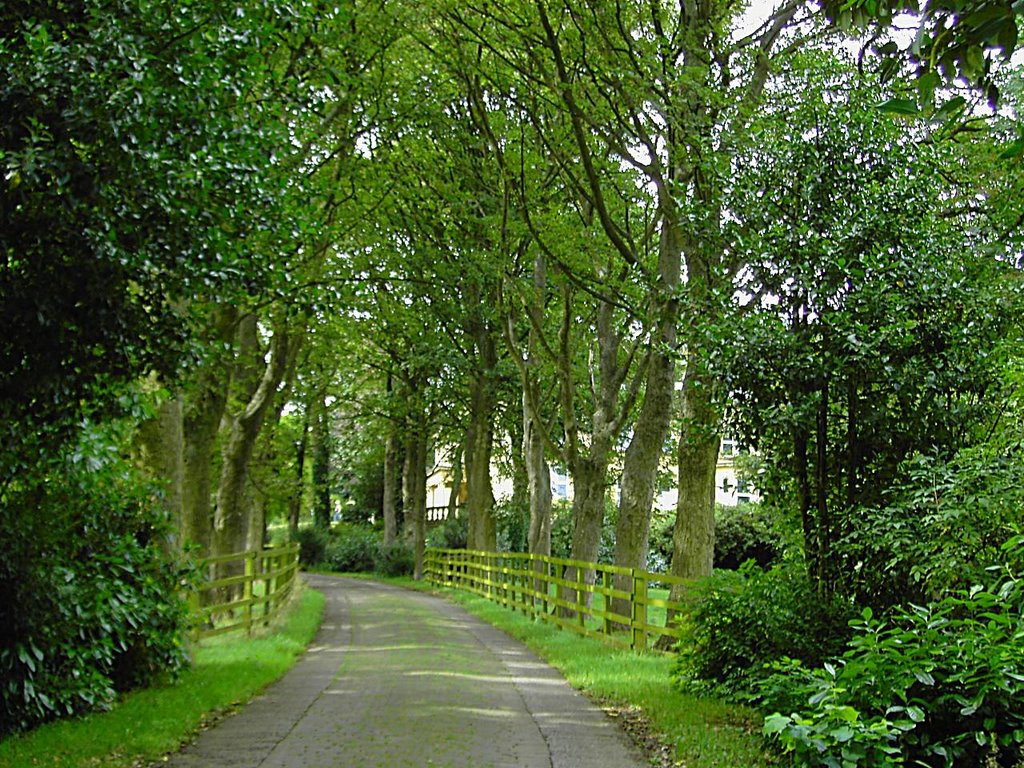
The approaching road & Gardens


Today we decided to take a 3 mile walk, beginning all uphill (makes it easier though coming home when tired out), to look at one of my favourite buildings in the area--Broadfold Hall.

When I say 'we', I mean me, baby and all-terrain pushchair, and 6 year old -running off ahead or dawlding painfully slow behind. My calves are burning now after pushing baby and pushchair uphill! The walk is worth it though, as we rested in the grounds of Broadfold. The house is nestled away amidst a mini-wood out of sight from the main road. The winding private road leading to the house is sheltered beneath a canopy of trees, adding to the grandeur of the approach.

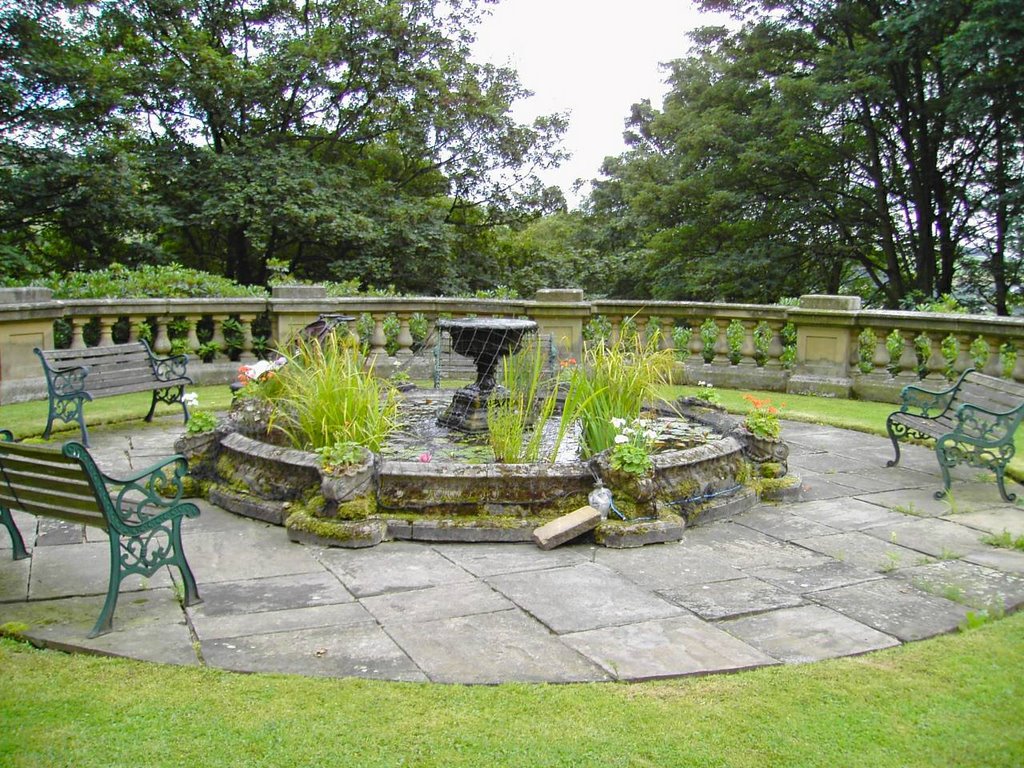
We took some time sitting in the garden, enjoying the fountain and pond full of extremely eager & friendly goldfish. The larger koi were slightly more reserved, hiding under the beautiful water lillies. Fountains to the front of buildings are good feng shui, so not surprisingly many stately homes have them--although I wonder if they were aware of that at the time, or was it just intuition and based on beauty??
The hall/home was built for the Murgatroyd family, one of the wealthy mill owners, in 1877. It was then sold on, and since converted into 12 individually owned flats. It is still a grade II listed building and the flats don't really diminish the exterior splendour. Behind the house we discovered an old coachhouse, also converted, and the old cobblestone road leading down into the village of Booth.

25 August 2006

A bit of village history


I’m currently living in the conservation village of Luddenden, amidst the very picturesque Pennine hills , in the northern area of the country. The little village itself dates back to Anglo-Saxon times, and the surrounding valley is full of history from the Middle Stone Age to the Bronze and Iron Age. Flints , tools & Celtic beads have all been found in the village. The village was historically centered around mills, with corn mills established in 1284. During the 15th century handloom weaving was established and in 1842 the first steam powered mill was built in the village. All the mills are gone now, converted into upscale flats. The village claim to fame now is winner of yorkshire in bloom, for its gardening feats.

As a lover of architecture and the personal mythology wrapped up in homes, I do enjoy this area as it reportedly has more 17th century houses than any other area of comparable size in the country. There’s also homes from the later half of the 19th century, built by wealthy mill owners. This village has some grand houses, and unfortunately we don’t live in one!

The heart of the village is the The Lord Nelson pub, built in 1634 and the oldest building here. And funnily enough, it sits across from the church and graveyard- which one can glean a lot of local history from. This general area, is known as Bronte Country, since the home of Charlotte & Emily is in Haworth, West Yorkshire, not far from here. The lesser known brother, Branwell Bronte, was the most famous customer of the pub.

Being from America (the new country), where buildings have a relatively short history, the age of the buildings here is amazing to me.. and the fact that so many are still standing, and standing in good shape. The stone holds a continous history and so many memories.